
Autumn Foliage in Korea: Typical Peak Dates by Mountain
Autumn foliage in Korea typically peaks between mid October and early November. KMA 1991 to 2020 normals put the peak at Seoraksan on 17 October, Bukhansan in Seoul on 28 October and Mudeungsan on 4 November. Actual dates can move by a week, so check KMA's live status (21 September to 27 November 2026).
Key facts
- Seoraksan normal peak
- 17 Oct[1]Earliest of the mountains listed; first colour normally 28 September
- Bukhansan (Seoul) normal peak
- 28 Oct[1]First colour normally 15 October
- Hallasan (Jeju) normal peak
- 28 Oct[2]1991 to 2020 normal, per KMA
- Mudeungsan normal peak
- 4 Nov[1]Latest of the mountains listed; first colour normally 21 October
- Peak means
- 80%[2]Share of the whole mountain in colour; first foliage is about 20% from the summit
- Seoraksan peak in 2025
- 24 Oct[3]A week after its 17 October normal
- Mountains tracked by KMA
- 21[2]Live status on Weather Nuri, 21 September to 27 November 2026
Checked 5 official sources
On this page 8 sections
- When do autumn leaves peak in Korea?
- What are the normal peak dates by mountain?
- What do “first foliage” and “peak” mean?
- How much do the dates change from year to year?
- Where can you check the live foliage status?
- How do you plan a foliage trip around these dates?
- What goes wrong for visitors, and how do you fix it?
- When this does not apply
- Questions people also ask
- Sources
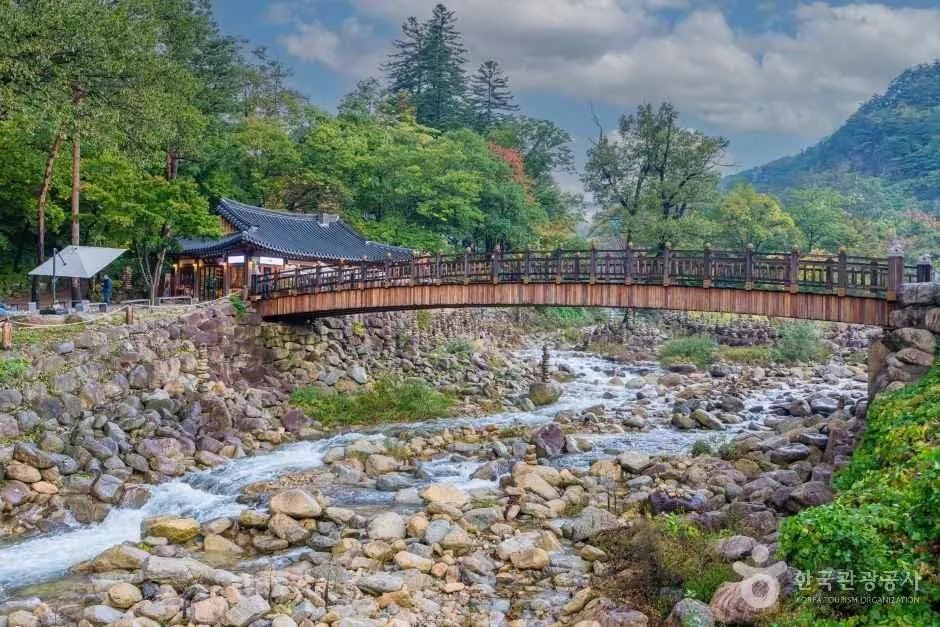
When do autumn leaves peak in Korea?
Autumn leaves in Korea usually peak between mid October and early November. The Korea Meteorological Administration (KMA) publishes normal dates for famous mountains, based on 1991 to 2020 records. Seoraksan in the northeast comes first at 17 October, and Mudeungsan in Gwangju comes last of the listed mountains at 4 November.
Colour starts high and in the north, then moves south and down the slopes. If your dates are fixed, pick a mountain whose normal peak falls inside your trip, then confirm with the live status a few days before you go.
What are the normal peak dates by mountain?
The table lists KMA’s normal start and peak dates for nine mountains. KMA describes these as typical dates for a 1991 to 2020 average year, not a forecast for any one season.
| Mountain | Area | Normal start | Normal peak |
|---|---|---|---|
| Seoraksan | Gangwon | 28 September | 17 October |
| Deogyusan | North Jeolla | 9 October | 21 October |
| Jirisan | South, inland | 11 October | 23 October |
| Gyeryongsan | Chungcheong | 16 October | 27 October |
| Juwangsan | North Gyeongsang | 16 October | 27 October |
| Bukhansan | Seoul | 15 October | 28 October |
| Palgongsan | Daegu | 17 October | 28 October |
| Hallasan | Jeju | not listed | 28 October |
| Mudeungsan | Gwangju | 21 October | 4 November |
Most of the list peaks in the last ten days of October. That makes the final week of October the most reliable window if you want to see colour in several regions on one trip.
What do “first foliage” and “peak” mean?
KMA uses two different scales: one for single reference trees and one for whole mountains. A reference tree has started when about 20% of its leaves have turned, and it peaks at about 80%.
A famous mountain has its first foliage when about 20% has turned, measured from the summit down. The mountain reaches its peak when about 80% of the whole mountain is in colour. So on the first foliage date, colour is mostly near the top, and the lower trails can still look green.
How much do the dates change from year to year?
Real dates often miss the normal by several days. Seoraksan peaked on 24 October in 2025, a week after its 17 October normal, according to KMA.
In 2026 Seoraksan’s first foliage arrived on 28 September, the same day as its normal and four days earlier than in 2025. A good start date does not fix the peak, though, because weather in October still moves it.
Where can you check the live foliage status?
KMA’s Weather Nuri site shows first foliage and peak dates for 21 major mountains as each one is observed. For 2026 the service runs from 21 September to 27 November.
On weather.go.kr, the page sits under current weather, then spring flowers and autumn leaves, then famous mountain foliage status. The page is in Korean, so a browser translation tool helps. When a mountain has no peak date yet, it has not reached 80%.
How do you plan a foliage trip around these dates?
Start with your travel dates, then pick the region. A short checklist:
- Find the mountains in the table whose normal peak falls in your trip.
- Plan the far ones (Seoraksan, Jirisan, Hallasan) first, since they need the most travel time.
- Book trains or buses once the route is set. See booking the KTX as a foreigner and express bus booking.
- A week before you go, open the KMA status page and move the order of your stops if one mountain is running early or late.
If you are in Seoul only, Bukhansan’s 28 October normal is the date to aim for. For the general weather picture in autumn, see the best time to visit Korea.
What goes wrong for visitors, and how do you fix it?
You arrive on the forecast date and the lower slopes are still green. The first foliage date only means colour has reached about a fifth of the mountain from the summit, per KMA. Aim for the peak date instead, or plan a longer trail that climbs toward the ridge.
Seoraksan is already brown when you get there in early November. Its normal peak is 17 October, the earliest in KMA’s list. Late trips do better heading south: Mudeungsan peaks around 4 November in a normal year.
A forecast from another site gives a different date from KMA. A forecast is a model, and two models rarely land on the same day. Treat KMA’s observed status on Weather Nuri as the record of what has actually happened, and check it before you set off.
The Hallasan summit trail turns you away at the gate. The two trails to the summit of Hallasan on Jeju, Seongpanak and Gwaneumsa, run on a reservation system, and entry is only allowed at your booked time. Book on the Hallasan reservation site before you fly, and check its notices for sections that are closed.
When this does not apply
These dates are 30 year averages for a summit area measured as a whole. City streets, palaces and parks at low altitude follow their own timing, and a single valley can turn earlier or later than the mountain around it. A warm September or an early cold snap can shift a whole season. Check KMA’s live status for the exact mountain before you travel.
Questions people also ask
When is the best week to see autumn leaves in Seoul?
Bukhansan, the national park on Seoul's northern edge, has a 1991 to 2020 normal peak of 28 October, per KMA. Late October is the safest bet, but check the live status before you go.
Where do the leaves turn first in Korea?
Seoraksan in Gangwon turns first among the mountains KMA lists, with first colour normally on 28 September and a peak on 17 October.
Is early November too late for autumn foliage?
Not in the south. Mudeungsan in Gwangju has a normal peak of 4 November, the latest of the mountains in KMA's list, while Seoraksan has usually passed its peak by then.
What does peak foliage mean in Korean forecasts?
KMA calls a famous mountain at its peak when about 80% of the whole mountain has turned. First foliage means about 20% has turned, counting down from the summit.
Sources
5 official pages checked on November 4, 2026
- Korea.kr: Seasonal changes, autumn edition (KMA, 14 October 2026, Korean), Korea Meteorological Administration
- Korea.kr: When to see autumn foliage this year (KMA, 8 October 2026, Korean), Korea Meteorological Administration
- KMA press release: First foliage at Seoraksan, 28 September 2026 (Korean), Korea Meteorological Administration
- KMA Weather Nuri: Famous mountain foliage status (Korean), Korea Meteorological Administration
- Hallasan National Park trail reservation (Korean), Jeju Special Self-Governing Province
Checked on November 4, 2026. Fares, hours and entry rules change, so confirm on the source page before you travel. Spotted something out of date? Email contact@korhow.com.